Dear Utah County,
One of the most universal occurrences in life is preparing to cook something and realizing you are down an ingredient or two.
Perhaps you’re making a salad, but the greens have wilted because you’ve procrastinated, opting for yummier options one day too long.
Perhaps you’re making pancakes, but the kids have used all the milk. Ok, almost all the milk, Emmaleigh points out there’s still some left. You need 2 cups though, not the 2 thimbles-full they so graciously left at the bottom of the jug.
So what do you do? Say it’s a Thursday night and you’re planning on the aforementioned salad, but the greens are wilted. However, you’re determined to eat healthy and will do what you must to follow through! What do you do?
Here’s the three main options:
You live on a rural farm: Mostly likely, the greens came from your large garden. Easy peasy! Send Emmaleigh to the garden and voila, fresh greens for the salad. Problem solved in 10 minutes or less, plus Emmaleigh got to help.
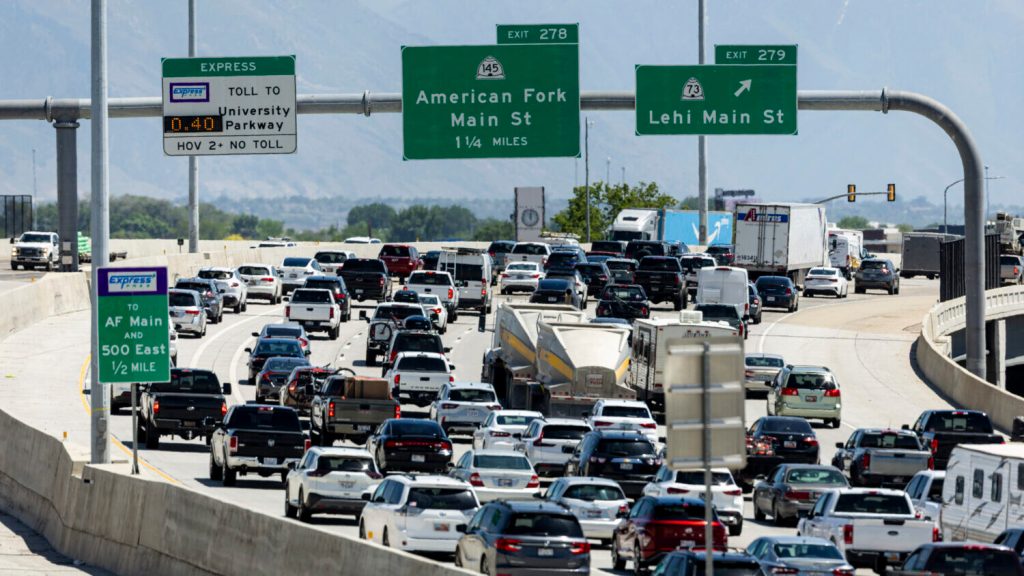
You live in town or in a city: Most likely, the greens came from a grocery store, and you’ll need to go back. It’ll likely be a 10 minute or so drive there (hope there’s a grocery store in your town), the same back, and probably 5-10 minutes at the store itself. If you’re unlucky the drive can take double or triple that time, depending on traffic and how close the store is. Problem solved in 25ish minutes, maybe longer.
You live in town or in a city and you’re super rich: Don’t be silly, you aren’t shopping for yourself or making your own salads. You pay a chef and/or an assistant to worry about these things.1 Problem solved in 0 minutes.
Let’s see how these options have changed in the past 150 years. The easy one comes first:
1875 as a super rich person: Chef and servants have it covered. Problem solved in 0 minutes.
1875 on a rural farm: Emily gets greens from the garden. Problem solved in 10 minutes or less.
1875 in town or in a city: Cars didn’t exist, so they walked to the general store or market down the street. Maybe they rode a horse or old-timey bicycle, but most people walked. Depending on how far down the street it’d take anywhere from 5-20 minutes. Lots of buildings had ground floor commercial/retail and upper floor residences, so it could have been as short as a walk downstairs.
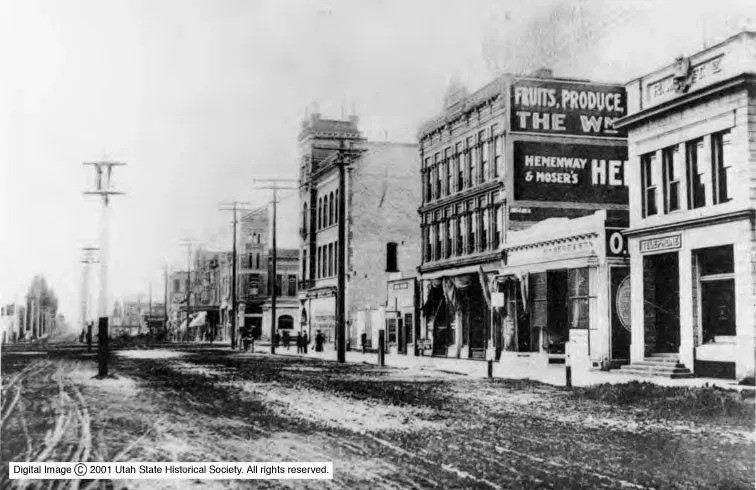
Photo of Provo Center Street near University Avenue in 1890.
Now let’s summarize the estimated times from the past two sections
| Living Situation | Est. Time Spent – 2025 | Est. Time Spent – 1875 |
| Rural | 10 minutes or less | 10 minutes or less |
| Regular Town/City | 25+ minutes | 5-20 minutes |
| Super Rich Town/City | 0 minutes | 0 minutes |
The super rich and the rural scenarios show the same time, but the regular people living in towns and cities… their trips are longer? How could this be? 150 years of technological advancement and somehow it takes longer to get groceries.
From then to now we’ve invented cars, learned to fly, sent numerous people to the moon, discovered penicillin, eradicated smallpox, discovered and split the atom, created computers and the internet, the list goes on and on. Yet typical travel time to groceries has increased. Our maximum estimated time for a typical townsperson in 1875 is shorter than our minimum estimated time for a typical townsperson now. How could this be?
The answer: Monopolies. Government-forced monopolies. These monopolies will be the topic of the next two blog posts.
Thanks for taking the time to read,
Your Neighbor in Vineyard
- Note: Of course the chef/assistant also has to spend time getting the groceries, an amount of time comparable to non-super-rich people. The same is true of grocery delivery services. ↩︎

Leave a comment